Curiosity and dialogue
Ask questions, examine assumptions, listen carefully and explain the reasons behind an idea. Make discussion a space for thinking together rather than a contest to win.

An independent community proposal · Tahir Akıncı
Developed by Tahir Akıncı, Apatheia is an education and culture proposal that reconnects science, philosophy, art, craft and nature with everyday life. Its first testable strand is a travelling school supported by media and archive work, meeting knowledge where it is made. A living campus immersed in nature is the longer-term horizon that could grow from those early trials.
Design and development · No open programme or participation yetThere is no operating school, open enrolment, confirmed campus, announced scholarship or investment call today. Apatheia is Tahir Akıncı’s original proposal; appearing here does not mean an operating partnership with BenBiz has been established.
This account is based on Tahir Akıncı’s 14-page Apatheia Vizyonu document. The project is in design and development today. Its long-term ambitions and references to institutions, supporters and expert networks are claims within the source text; they are not presented here as current operations, independently verified partnerships or confirmed programmes.
The next concrete step is to clarify the scope of a first trial, its intended participants, team and resource needs with Tahir Akıncı. Programme safety, permissions, content rights and any requirements for formal recognition are also preparation topics for relevant specialist review.
Participation routes, dates and terms will be announced separately if confirmed. For now, you can explore the project’s direction, ask questions or describe a contribution you might offer in the future.
Hearing something and understanding it through experience are not the same. Apatheia asks education to nurture curiosity, self-knowledge, imagination and the ability to live together alongside knowledge and preparation for work. Freedom here does not mean rejecting everything we hear; it means having time to understand an idea, test it and make it our own before accepting it.
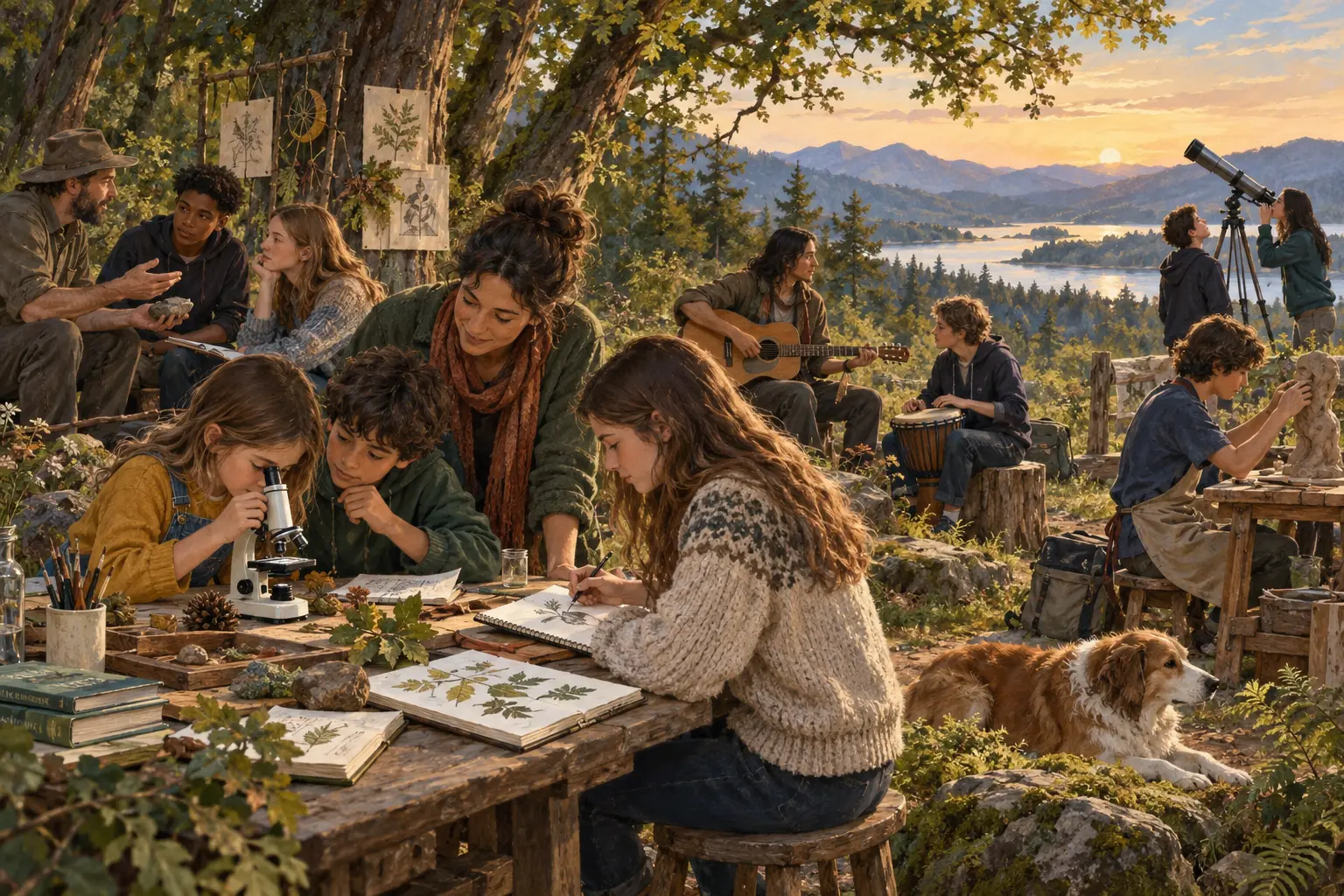
Learners in this proposal are not simply recipients of prepared answers. They ask, investigate, make and test what they learn in ordinary life. Work in a garden might connect biology, ecology and shared responsibility; a design project might bring science, aesthetics and practical skill to the same table.
The original document draws from a wide field: Ancient Greek academies, modern liberal education, the open spirit of Waldorf and Montessori, and Eastern monastic traditions; it also approaches the relationship between beauty, the sacred and harmony through a Christian lens. These are foundations in Tahir Akıncı’s source text. How a shared learning environment would welcome people of different faiths and worldviews remains a design question to discuss openly before any programme begins.
Rather than treating subjects as separate worlds, Apatheia proposes bringing science, art, thought and practical skill together around a genuine curiosity. It takes the learner’s attention and question seriously instead of imposing a ready-made mould.
Ask questions, examine assumptions, listen carefully and explain the reasons behind an idea. Make discussion a space for thinking together rather than a contest to win.
Turn knowledge into practice through workshops, experiments, apprenticeships and creative projects. Building a solar oven, working with clay or growing plants could all become learning experiences.
Bring science, the humanities, art and craft to bear on the same question. Value observation, experimentation and reconsideration alongside the finished outcome.
Learn with educators, artists, researchers and practitioners while allowing room for individual rhythms. Contact with nature, quiet reflection and shared production can complement one another.
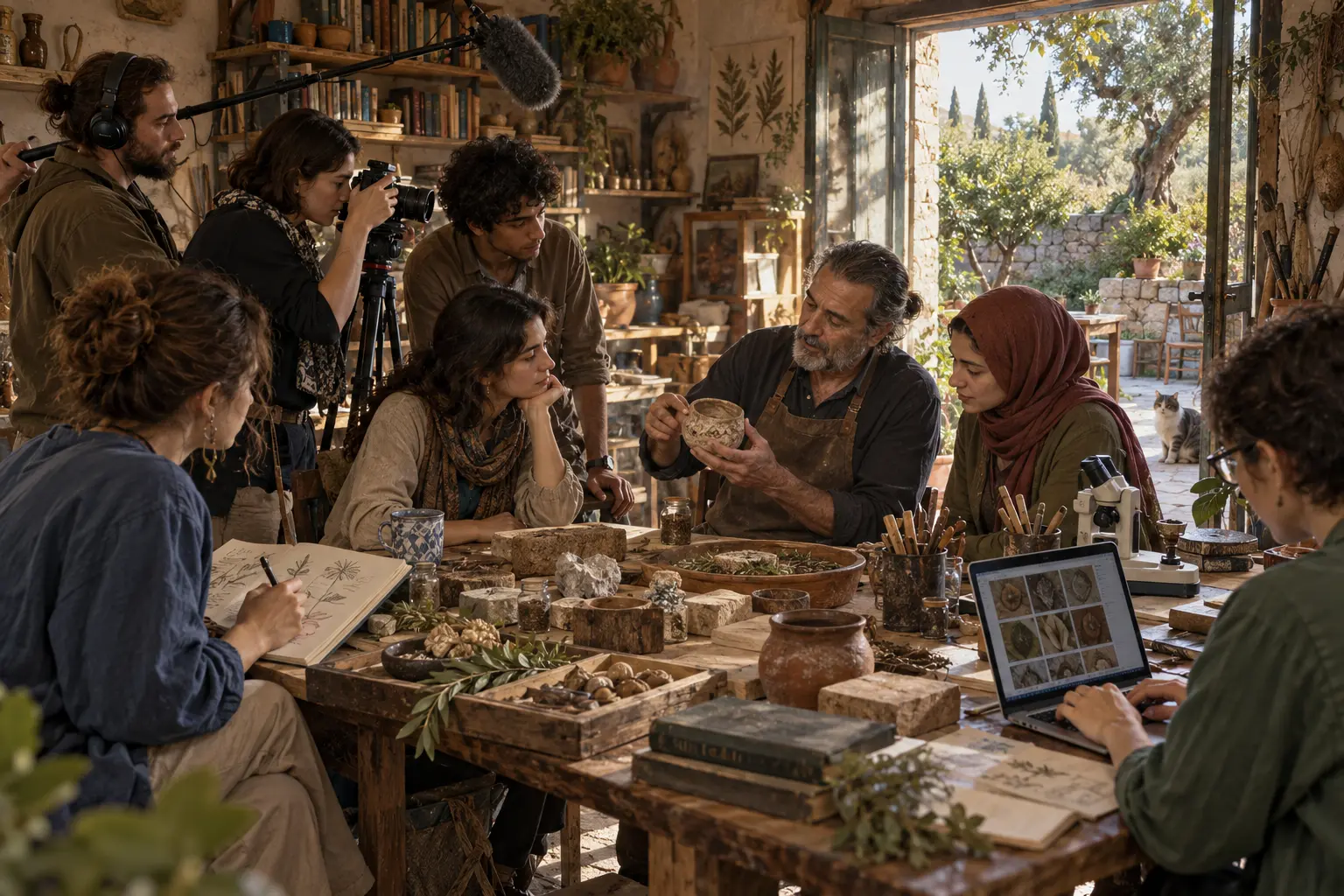
Apatheia’s proposed starting point is not to wait for a large campus, but to begin with a small travelling-school and media trial. A scientist’s laboratory, an artist’s studio, a farmer’s field or a thinker’s study could temporarily become a place of learning.
The aim is to document lessons, conversations and workshops as educational videos, podcasts, documentaries and an organised digital archive. Knowledge would then reach beyond those physically present at an event, opening a window for people elsewhere.
This is not an operating publishing, travel or education programme today. No topic, educator, intended participants, team, budget or schedule has been announced for a first trial. Recording and publication permission, content rights, editorial responsibility, safeguards for any work involving children and access terms would all need to be settled before it begins.
The long-term campus concept is a living environment for inquiry, where learning reaches beyond the classroom. These are not existing facilities, but project areas that could be developed if a place, permission, people and resources become available.
Explore ecology, food and sustainable production through organic gardens, greenhouses and agricultural work, using the natural environment for observation, measurement and inquiry.
Design, experiment and build prototypes in settings ranging from ceramics and woodwork to painting and robotics. Bring practical making, art and research into the same process.
Connect a physical library with a digital archive, with different spaces for outdoor discussion, reading, research and quiet study.
Bring people with different experiences together through shared kitchens, accommodation and visiting workspaces. Cooking and living together can become opportunities to learn about culture, responsibility and sharing.
The original document describes five horizons at 1, 3, 5, 10 and 20 years. This page treats them as a sense of direction to test as conditions emerge—not fixed opening dates, completed milestones or promises.
Develop a small-scale production model for travelling recordings, educational content and a digital archive. Use the first outputs to make the approach visible and assessable.
Build connections with educators and test the approach through limited programmes such as workshops, conversations and a summer school.
When experience, people, a place and resources allow, bring project-based learning, mentoring and workshops into a shared living environment.
Turn accumulated experience into research, publishing and educator development, considering programmes for different ages and needs.
Extend beyond the campus through digital access, intercultural work and new learning communities.
The document proposes gradually developing complementary sources of support through digital courses, archive access, publications and events, with resources directed back into educational work. Educational consultancy and visiting programmes are among the possibilities considered for later stages.
To avoid making access depend solely on the ability to pay, the document sets a design goal of allocating 25 per cent of educational content and programme capacity to free access. This does not mean scholarships or free enrolment places are currently available.
Budgets, fees, eligibility for free access and responsibilities would need to be clarified before implementation. This introduction does not collect payments or donations, or offer an investment or promised income.
Apatheia appears here as a project proposed by Tahir Akıncı. BenBiz’s role is to explore opportunities for complementary people to work together while respecting the idea’s originator and identity. Listing the project does not mean BenBiz operates it or assumes all its responsibilities.
If principles, scope and working terms are agreed, a solidarity circle could be considered around a limited goal. Preparing initial educational content, for example, might bring together contributions in learning design, filming, sound, editing, archive organisation, translation and coordination. These are possible workstreams, not available assignments or job vacancies.
Before a circle opens, the proposer’s approval, tasks, decision rights, content rights, costs and terms of contribution should be clear. Task and communication tracking in the member app would follow those preparations; there is no active Apatheia circle accepting registrations today.
Perhaps you have a skill, an experience to share or a small thing you noticed. Let’s see what we could do together and find a place that feels right for you.
Explore places to build together →TAHİR AKINCI’S ORIGINAL PROJECT DOCUMENT
This web page describes Apatheia’s present status and its boundary with BenBiz in current language. The 14-page Turkish document below preserves the project’s philosophy and its proposed 1–3–5–10–20-year path, including ideas for access, resources, collaboration and equipment. References to institutions, supporters and future plans are claims in the source document, not current verification.
14 pages · Original source in Turkish · Preserved without alterationFirst step: a conversation
Briefly share your questions and experience in education, media production, archives, translation or coordination. This first contact is not student enrolment or an application for circle membership.
Express interest in ApatheiaYour email app opens; you choose whether to send the message. Sending it does not mean publication or acceptance. Do not send passwords, payment details or confidential documents.
iletiselim@benbiz.com.tr