01About 30–45 minutes
Quick introduction
For people getting to know BenBizFour guides introduce the need behind BenBiz, how a circle takes shape and what sharing responsibility involves.

BenBiz Reading Area (Külliyat)
Search for an answer, choose a topic or follow a reading path into BenBiz. Start with a short explanation, then explore the current guide and its unchanged original source. Reading is open to everyone; no account is needed.

Questions and short answers
Open the question on your mind. Each short answer leads to a guide you can explore.
Follow the quick introduction path through four guides on why BenBiz exists, the circle and shared responsibility. You do not need an account to read.
Open the introduction pathOpen an area that interests you through Build Together. If a call is open for applications, read its terms. After you apply, follow the reply in My Applications and the notification bell in the app.
See the participation stepsYes. With an Explorer Member account, you can add a question, correction, experience or source to a guide. You do not need to be a circle member.
See the Explorer Member pathThe Shared Decisions guide uses examples to show how a proposal is opened, how views and votes are gathered, and how the decision is followed through.
Read the decision examplesShelves in storage, an unused afternoon or a familiar skill could be someone else’s missing piece. Follow three illustrative scenes in which people discuss an exchange on their own terms.
Read the Exchange examplesExpecting no return and waiting for compensation are different choices. Agree on the contribution, the part paid now and the conditions for anything left outstanding. Sharing a surplus needs separate terms.
Read about contributions and rightsFor today’s workflow, read the dated web guide. To see how the thinking developed, follow the link in the guide to the unchanged original source.
See how guides and sources connectThe BenBiz & mindbugnush page brings together the pilot’s purpose, preparations and ways to participate. You can also reach the educators’ photographs and original documents from there.
Explore BenBiz & mindbugnushTopic shelves
Open a shelf, then choose a guide or page that suits you.
013 readingsDiscover BenBizExplore why BenBiz exists, how we live and work together, and where to start reading.+ 023 readingsCircles and shared decisionsLearn how we gather around a need, share responsibility and make decisions together.+
 034 readingsContributions and compensationRead about exchange, pay, voluntary contributions and the value we create together.+
 043 readingsProjects and horizonsExplore the projects’ next steps and the research shaping their future.+
 053 readingsJoining and using BenBizFollow the steps from website to app, membership and ways to contribute.+
 063 readingsTexts and original sourcesFind founding texts, the archive and the educators’ original documents.+
Three reading paths
Choose a path for a quick introduction, a closer look at how BenBiz works or preparation for working together. Each path opens the guides in a sequence that builds on what you have read.
Four guides introduce the need behind BenBiz, how a circle takes shape and what sharing responsibility involves.
See how contributions, decisions and sharing fit together. Follow an example to understand how compensation for work is considered.
Explore the principles, digital application, contribution assessment and ObaNova. Use the current guides to look more closely at the steps involved in working together.
Times are estimates for reading and working with the sources. The web guides can be read more quickly.
BenBiz & mindbugnush
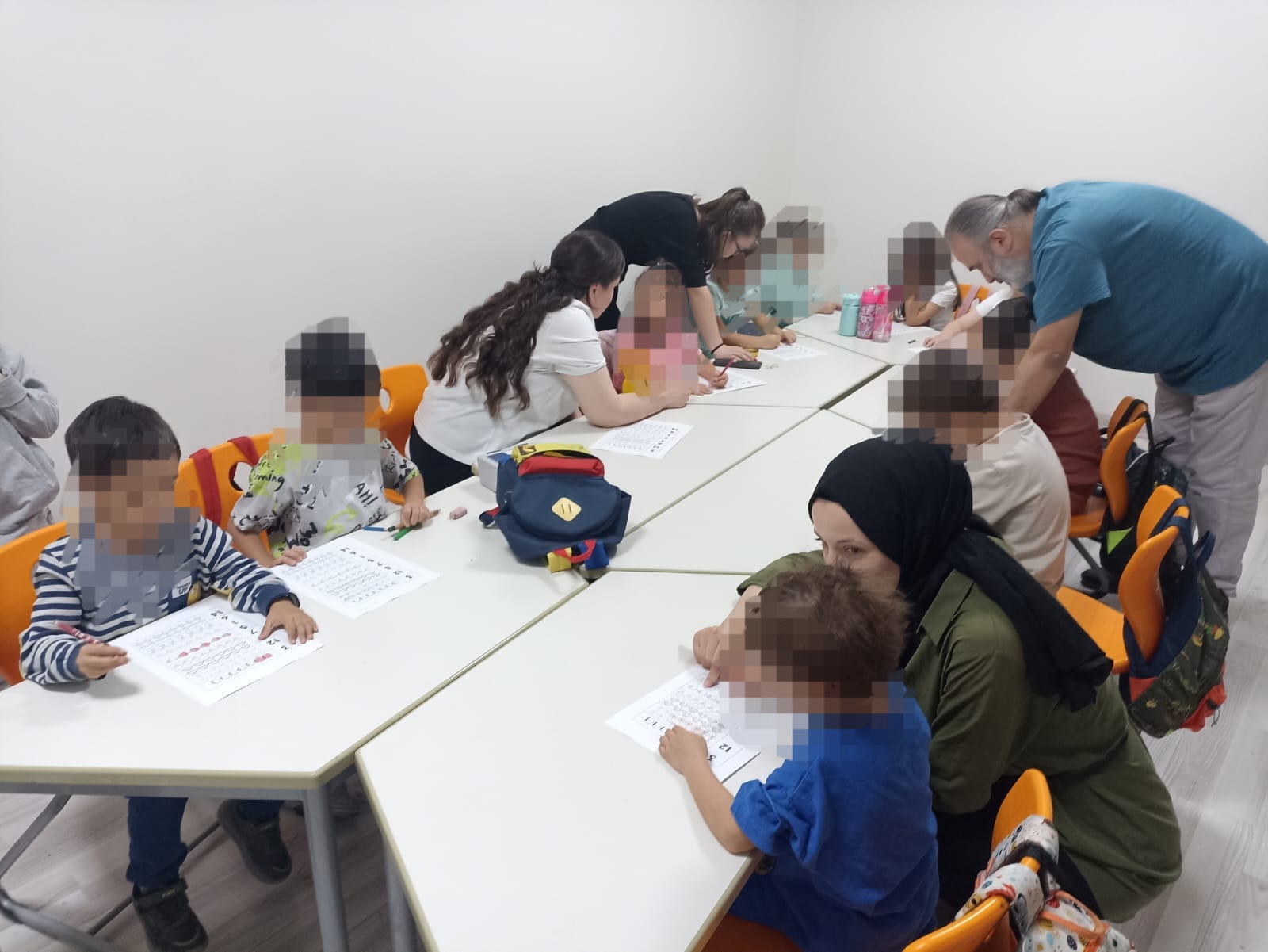
To find out what the Nörokripto programme involves, start with the materials prepared by Şeref Gökmen and Elif Özcan. Explore their educational texts, original PDFs, posters and photographs from previous workshops.
The educators’ original texts and documents are kept in Turkish, unchanged.
Shared Decisions · Deciding together
You might want to change a group’s meeting time or make an unclear part of the website easier to understand. In Shared Decisions, you describe the need and refine your proposal with other people’s views. You can vote on topics where you are eligible, then follow how the decision is put into practice.
You can read the guide and try its voting calculation without an account. The exercise creates no real vote or record. To take part in the app, use a verified, active member account.
Learning through images
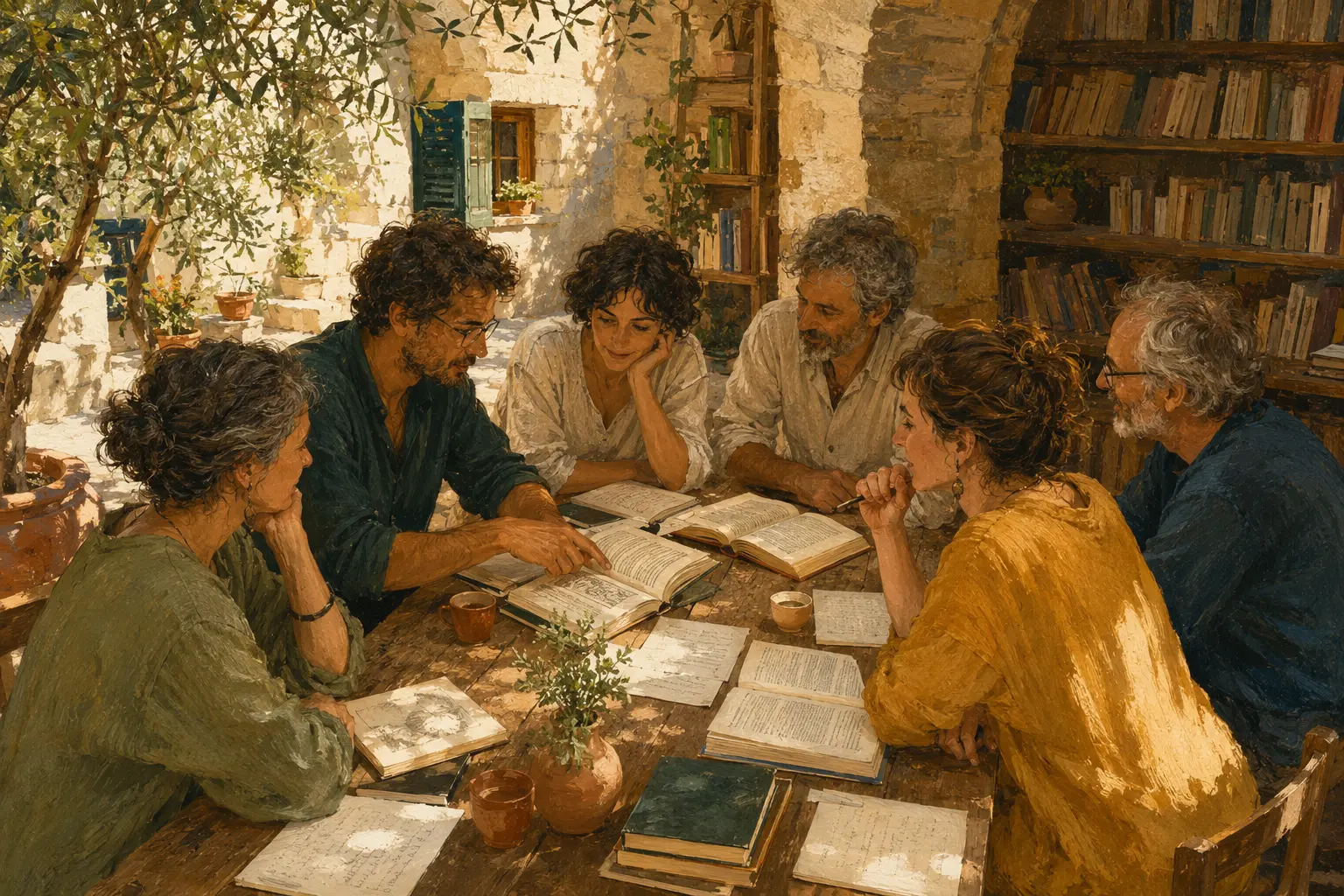
Sometimes a scene helps you understand an idea. These two illustrations show people learning together and a path from a question to the sources behind it.


Look at the people, setting and relationships in the illustration. When you want more detail, continue to the relevant guide.
The BenBiz & mindbugnush collection brings together the educators’ photographs, posters and original documents.
New photographs and shareable notes from work together can add more examples over time.
Today’s work comes first
You may want to know how a circle forms, how compensation is agreed or where to begin with a project. These ten topics point you to the pages that explain today’s approach.
Read why a good idea can be hard to put into practice and how BenBiz proposes a way to work together.
Open the pageFollow a need through to a shared plan: who will do what, under which conditions, and how will compensation be agreed?
Open the pageSee how we protect human dignity, fair treatment of work, nature, privacy and the right to object while working together.
Open the pageExplore the preparations for BenBiz & mindbugnush, ObaNova’s longer-term direction and the stage of each project on its own page.
Open the pageUse examples to distinguish recording a contribution, an economic entitlement arising and making a payment.
Open the pageSee how the trial model assesses a contribution and the results from ten examples. These trials create no payments or entitlements.
Go to this sectionExplore five steps from saying what you need to finishing a small piece of work together.
Go to this sectionExplore the settlement idea, production paths and research questions; see where your resources or questions might contribute.
Open the pageLearn through examples how a proposal is discussed, voted on and followed through after a decision.
Open the pageExplore areas in preparation, where to find the terms of an open call and how applications are reviewed.
Open the pageQuestions you may have
Open a question to read a short answer. When you want more detail, follow the links below it to the relevant page or guide.
Yes. You can offer work for a product, a product for a service or short-term use of a space. Both sides discuss what they offer and the terms of the exchange. Time freely given without expecting a return belongs to the solidarity route.
With a verified, active account, you can propose, share views and vote where you are eligible. The guide explains who can take part in each area. The starting rule requires at least 60% participation by eligible voters and at least 60% yes votes among votes cast. Try the calculation without an account; it creates no real vote.
Putting a good idea into practice may take people, a place, knowledge or tools. BenBiz aims to bring these resources together around a shared need and make compensation clear from the start. We want unseen work to have a voice, with care for nature and people’s limits.
It can begin with a shared need, such as finding a venue for a learning group. People discuss what they can offer, who will do what, expenses and compensation from the start. We call the small group working around that agreement a Solidarity Circle.
No. Freely given support is one choice; leaving agreed compensation outstanding is another. Payment for living costs, outstanding contributions and any time-limited sharing of a surplus have separate terms. Follow an everyday example to see the difference.
DÇM‑0.3 is a trial model for examining a specific contribution. It first separates pay, expenses, donations and shared contributions, then uses twenty criteria, evidence, two independent reviews and the Justice Gates. A score does not measure a person’s worth or create a decision, economic entitlement or payment by itself.
Ten hypothetical cases showed where we might go wrong when applying the same rules to pay, donations, care work, risk and founding contributions. A high score, for example, does not automatically mean a larger share. These trials do not replace human review of real contribution records.
The method is built around being able to see the reasons for a result affecting you and raise an objection. Criteria and reasons enter the record, and assessments are subject to human approval. The related guide explains the rules and responsibilities along that route.
Our current preparation focuses on the BenBiz & mindbugnush. Programme and participation terms appear on its page as they become clear. Bursa Şifahane, mentioned in the founding documents, is a historical example of how the thinking developed; read it in that context.
Yes. You can explore the Guest area without an account. With an Explorer Member account, follow open developments and share questions, sources or experiences for the website, Reading Area and ObaNova guide. You do not have to join a circle for this. Circle-specific tasks and communication open with that circle’s approval.
You can explore BenBiz Store shelves and share needs and contributions in Exchange. A representative shopping rehearsal is also available; real sales and payments are not open yet. BenAkçe and BenGram are described for information and trials; they are not in use as money, gold, investment or payment products.
For today’s workflow, consult the dated web guide and the relevant current page. The original PDF is kept unchanged as a source showing how the thinking developed. You can read them side by side with those different purposes in mind.
Start by saying what you want to do, what you can offer and where you need support. With people who complement you, choose a small task you can carry, look at its result and share what you learn. The guide brings these five steps and today’s tools together.
Each oba can take shape through the interests and specialisms of its people and the conditions of its place. One might focus on farming, another on education, production or research. Learning from small trials is shared; common principles and mutual help connect the obas. This is long-term work we will develop together.
Joining · application · website
You may want to open an account, follow a task in the app or find something on the website. Choose the guide you need and read the steps relevant to you.
Learn what you can explore without an account, what an Explorer Member can do and how the conversation and approval steps lead to circle membership.
Open guide →Find where to follow your education request, personal QR link and referral checks, and how to use the task area of a circle that has approved your membership.
Open guide →Find the BenBiz & mindbugnush page, current guides and original sources, and see how to move into the app when you need it.
Open guide →Working together
We may all be keen while talking about an idea. Once work begins, our time, needs and what we can offer differ. In BenBiz, we want to discuss those differences early so everyone can choose a contribution they can manage.
When planning a small gathering, one person might offer a space, another prepare the announcement and someone else have just an hour to spare. These five steps help us discuss needs and limits while sharing the work.
Are you looking for help or offering something? Share the time you can spare and where you need support.
Talk with others interested in the same need. Explore what each person can offer; you do not all need the same skills.
Agree what will be done, who will take it on and when it should be finished. Discuss expenses and compensation before starting.
Was the task finished, and did it meet the need? See where the effort helped and what support is still missing.
Note what worked and where you struggled. Share the learning without disclosing personal information so the next task can benefit from it.
ObaNova guide · 0.3
One oba might focus on farming, another on crafts, education or research. What it could do depends on the knowledge of the people forming it and the conditions of the place. Shared principles connect these different places.
The guide explores personal space in shared living, production and research through seven topics. Each sets out what we know, what needs checking and where a contribution could help.
You can offer a place, tools, knowledge or experience, or share a need or research question. You do not need a finished project.
You can read the guide without an account. Once you have verified your email, you can leave a note with your Explorer Member account; circle membership is not required.
This contribution path creates no promise of residency, a role, partnership, entitlement or payment.
Five guides to DÇM‑0.3
When we see a finished piece of work, preparation, care and follow-up can go unnoticed. The Value and Justice Engine (DÇM‑0.3) is a trial model exploring criteria for discussing these different contributions. Choose the guide you need.
Read how work, risk, value created and continuity are examined. See why pay, expenses and donations are kept separate from contribution scores.
Open guide →Follow the screen journey from preparing a trial record through two independent reviews and the checks for fairness.
Open guide →Compare how ten hypothetical cases treat pay, donations, care work and founding contributions. See why a high score is not enough on its own.
Open guide →Read which rules changed after the trials, why they changed and how earlier results are preserved.
Open guide →Learn which laboratory steps you can try, what the results mean and what needs to be completed before real economic use.
Open guide →Contribute to the Reading Area
If a sentence is unclear, you notice an error or your experience differs, you can share it with us. Your questions and notes can help us improve the explanation together.
You can read the guides without an account. To leave a note, an Explorer Member account with a verified email address is enough; you do not need to join a circle or take on a task.
Open Reading Area contributionsChoose the guide your note relates to and, if useful, a specific section. Select the type that fits: question, wording suggestion, correction, objection, experience or source.
Follow your note in “My Reading Contributions” in the app. You can see the publishing team’s reply, any request for clarification, the outcome and the route for reconsideration.
Two independent people review changes affecting principles. If the text changes, Turkish and English are updated together, and the earlier wording remains on record.
Three different reading paths
If you’re new to BenBiz, start with the short introduction. If you want to explore further or prepare to work with a team, the other two paths take you through the relevant sources in order.
If you’re new to BenBiz
Read why BenBiz began, what a Solidarity Circle is and what responsibilities come with the invitation to join.
4 guides · in reading order
Begin this pathIf you want to understand the approach in depth
Read the main sections in order and think through work, compensation and sharing with an example. This path can help you bring your questions to a shared discussion.
9 guides · in reading order
Begin this pathIf you’re preparing to work together
Read the principles and working arrangements together as your team prepares. The sequence also includes digital design, DÇM‑0.3 trials, ObaNova and participation guides.
29 guides · in reading order
Begin this pathThe times are approximate reading and working periods, including time for discussion. You can read the web guides in less time, without an account. The unchanged source PDFs remain in Turkish.
Current guides · original sources
Start with the current guides to learn how things work today. Read the original sources to see how the BenBiz idea developed. Choose a topic below or search with a word that interests you.
Enter a title or word; choose a topic to narrow your search.
Choose a topic
31 guides
Current guide 0.1 · 10 September 2026
Discover how a proposal is heard, how 60% participation and 60% approval shape a decision, and how shared work is followed through.
Essence: A living community gives people a real way to influence what they share.
Current web guide 1.4 · 24 October 2026
Shelves in a corner, an unused afternoon, a familiar skill: what could change when they meet someone else’s need? Follow the examples through to your first listing.
Essence: Something you no longer need could be the missing piece that lets someone else begin.
Current guide
The full guide to maker stories, shared production, exchanges, trust and participation.
Essence: Know the product and its maker together.
Current guide
Why BenBiz, the bag example, the application, tools and participation in depth.
Essence: Why BenBiz, the bag example, the application, tools and participation in depth.
Current guide
Earlier writing, notes from the beginning, sample narratives and publishing principles.
Essence: Earlier writing, notes from the beginning, sample narratives and publishing principles.
Current guide
Profile visibility, meeting through interests and skills, responsibilities and contributions.
Essence: Profile visibility, meeting through interests and skills, responsibilities and contributions.
Informational model and converter
Contribution records, agreements, a gold-based reference model and dated converter.
Essence: Records, rights and actual payment remain distinct; wallets and payment services are unavailable.
Current design guide · 6 September 2026
How can we build a shared place where everyone brings their own colour, joins as their intention and strength allow, and sees where their contribution goes?
Essence: Being alive together does not mean everyone is always busy. It means a need can be heard, the right people can meet freely, their work can reach someone and what they learn is not forgotten.
Working guide
Where should we begin, in what order should we read, and how can we test what we understand together?
Essence: The aim is not to approve a ready-made idea, but to understand the same thing well enough to question it together.
Part 1 of 7
Why do good intentions also need fair relationships to support them from the very beginning?
Essence: The continuation of good work should not depend on the same few people continually giving themselves up.
Part 2 of 7
A working foundation that brings different resources around a shared purpose and clear responsibilities.
Essence: Equal human dignity; fairness when contributions are assessed.
Current account · 24 October 2026
Giving freely and waiting for compensation are different choices. Explore living costs, outstanding contributions and sharing value for an agreed period.
Essence: Choosing not to receive compensation today does not mean giving up an agreed right.
Part 4 of 7
Connecting purpose, need, contribution, records, decisions and sharing in a traceable cycle.
Essence: A promise, a completed contribution and a resulting right must remain separately visible.
Part 5 of 7
Offering more than belonging: room to develop ideas, earn a living, take part in decisions and experiment safely.
Essence: Young people should be able to become co-founders in the present, not merely inheritors of the future.
Part 6 of 7 · Not today’s pilot
An example exploring how a place, specialist knowledge and social trust could connect through one shared way of working.
Essence: A ready building and a strong network of people do not automatically create a fair system.
Part 7 of 7
Moving from liking an idea to carrying a defined and sustainable contribution together.
Essence: An honest “I cannot do this for now” is more trustworthy than an unsustainable “I will always be here.”
Hypothetical example
Using one example month to distinguish direct rights, operating needs, the common pool and shared funds.
Essence: Contribution points illustrate the distribution of a clearly separated common contribution pool, not total revenue.
Design document 0.1 · August 2026
Identity, need, work, rights and decision layers connecting autonomous circles through a shared protocol.
Essence: One digital doorway does not mean every circle is managed from one centre.
Design document 0.1 · August 2026
A human journey from discovery and mutual fit to a first task and visible contribution and rights.
Essence: Creating an account is not the same as entering a circle or receiving unlimited authority.
Summary presentation for the core team
Explaining together why we began, what we are building and how first responsibilities can be shared.
Essence: The Solidarity Circle is neither unlimited sacrifice nor a compromise with a system concerned only with profit.
Preliminary introduction · August 2026
An early account of how principles about people, work and trust could become functions in a mobile experience.
Essence: Technology exists to make contributions and reasons visible, not to pass judgment.
Pilot 0.1 · August 2026
A technical frame connecting the mobile surface, operating rules and the memory of records.
Essence: The user sees a simple path; behind it, every record remains connected to the next step.
Current experimental model · 5 September 2026
The current engine framework for making unlike contributions visible while protecting direct rights, human dignity and reasoned shared decisions.
Essence: The engine does not measure a person’s worth. It shows the information, explanations and evidence used to discuss one specific contribution.
Practice guide · DÇM‑0.3 / CAL‑001
A guide to the laboratory journey from a contribution event through blind reviews and Justice Gates to an explained result.
Essence: The screen answers “why is this record in this state?” before the number can carry meaning through its scope, evidence and open blockers.
Calibration 0.1 · Ten hypothetical cases
The first comparison testing whether the engine sends the right value to the right channel across ten different tensions.
Essence: Calibration is not about making scores look attractive. It keeps every result—including a high number—inside boundaries of rights, scope, evidence and justice.
Available laboratory · released 5 September 2026
A status record separating the experience the DÇM‑0.3 interface actually offers today from the economic and governance layers not yet opened.
Essence: A live laboratory does not mean that a real entitlement and payment system is complete.
Updated record · since 5 September 2026
A record of settled principles, experimental decisions, scenario outcomes and application rules that keeps earlier decisions visible.
Essence: Staying current does not mean rewriting the past. It means showing what changed, why, by whom and when.
Shared design 0.3 · 11 September 2026
A current guide to how the “I” and the “We” might take root in shared life through specialisation, living R&D and small, honest trials.
Essence: ObaNova is not a ready-made plan for life. It is a vision for a network of settlements where people can remain themselves while living, making, learning and inquiring together.
Current guide 1.5 · 16 September 2026
A clear path from account-free discovery to Explorer Membership, website and Reading Area contributions, and circle membership.
Essence: You do not need to be accepted into a circle before approaching BenBiz; an Explorer Member account gives you a door of your own.
Current guide 1.10 · 24 October 2026
Find your route from membership and tasks to Istanbul education requests, personal QR links, source confirmation, group preparation and account tracking.
Essence: Choose what you want to do first; let the application open only the door that task needs.
Current guide 1.9 · 16 September 2026
Find the current route from the homepage to the Istanbul education pilot, original educational sources and application tracking in the app.
Essence: Do not try to read everything; choose what you need first, then open the right door.
The words we use
You do not need to memorise these terms. Choose a word you get stuck on, open its short explanation and follow the related guide if you want to read more.
A shared understanding of whom a circle works for, which need it aims to meet and the limits of its work.
Read the related guideBringing money, work, knowledge, time, space, equipment and relationships together to meet a need.
Read the related guideBoth parties clearly agree on the contribution, duration, compensation, support, limits and conditions for leaving.
Read the related guideCompensation agreed separately, such as pay, a service fee, expense reimbursement or a usage fee.
Read the related guideAn assessment supported by evidence of work, risk, value created and continuity in a particular project and period. It does not measure human worth; it is not money and creates no entitlement or permanent status.
Read the related guideValue kept separate from direct rights and other obligations. It is shared among contributions according to rules accepted in advance.
Read the related guideA record of a single piece of work or resource, with the contributor identified. It states the period, scope, type, value channels and supporting evidence.
Read the related guideSteps that check whether an assessment is fair. They check that assessment and economic rights are kept separate, contributions are not counted twice, reviews are impartial, and participants can see their records and object.
Read the related guideUsed, with a reason, when a criterion is unrelated to the contribution. It is not a zero score and is excluded from the average.
Read the related guideShows how strongly a score is supported by statements, outputs, traces, testimony or verification. This is assessed separately from the stage of the decision.
Read the related guideRecording a new decision without erasing the earlier one. Its date, reason, the rule used and linked events are included in the record.
Read the related guideSharing through free consent and clear limits. We cannot assume that a person has given up their right to fair compensation.
Read the related guideThe shared method growing into concrete work in education, production or another field.
Read the related guideFrom the text to the table
The same text can raise a different question for each of us. These four steps help us share what we understood, discuss doubts and decide on the next step we can take together.
Explain the main idea in your own words. Listen to one another to see whether you are starting from the same understanding.
Is there a question left open from an earlier reading? Discuss what this guide adds and how it connects with the other topics.
Ask about what you do not understand, and name risks and objections separately. Discuss which point needs an explanation, further research or a shared decision.
What would this idea change in everyday life? Decide how it could become a behaviour, rule, task or screen, and who will take the first step.
At the end, make a short note of what you understood together, the questions still open and who will carry each next step. You can return to it at your next meeting.
Open the working guideFrom reading to shared work
If a question, correction or example from your own life comes to mind while reading, you can share it.
In the app’s “My Reading Contributions” screen, you can follow the reply to your note and see whether the text changes.
You can read the guides without an account. To leave a note, you only need an Explorer Member account with a verified email address.