
The essence of this text
Equal human dignity; fairness when contributions are assessed.
This English guide is based on the source document and also states how BenBiz works today. It does not present older examples, terms or technical assumptions as current rules. The unchanged original remains available as a Turkish PDF.
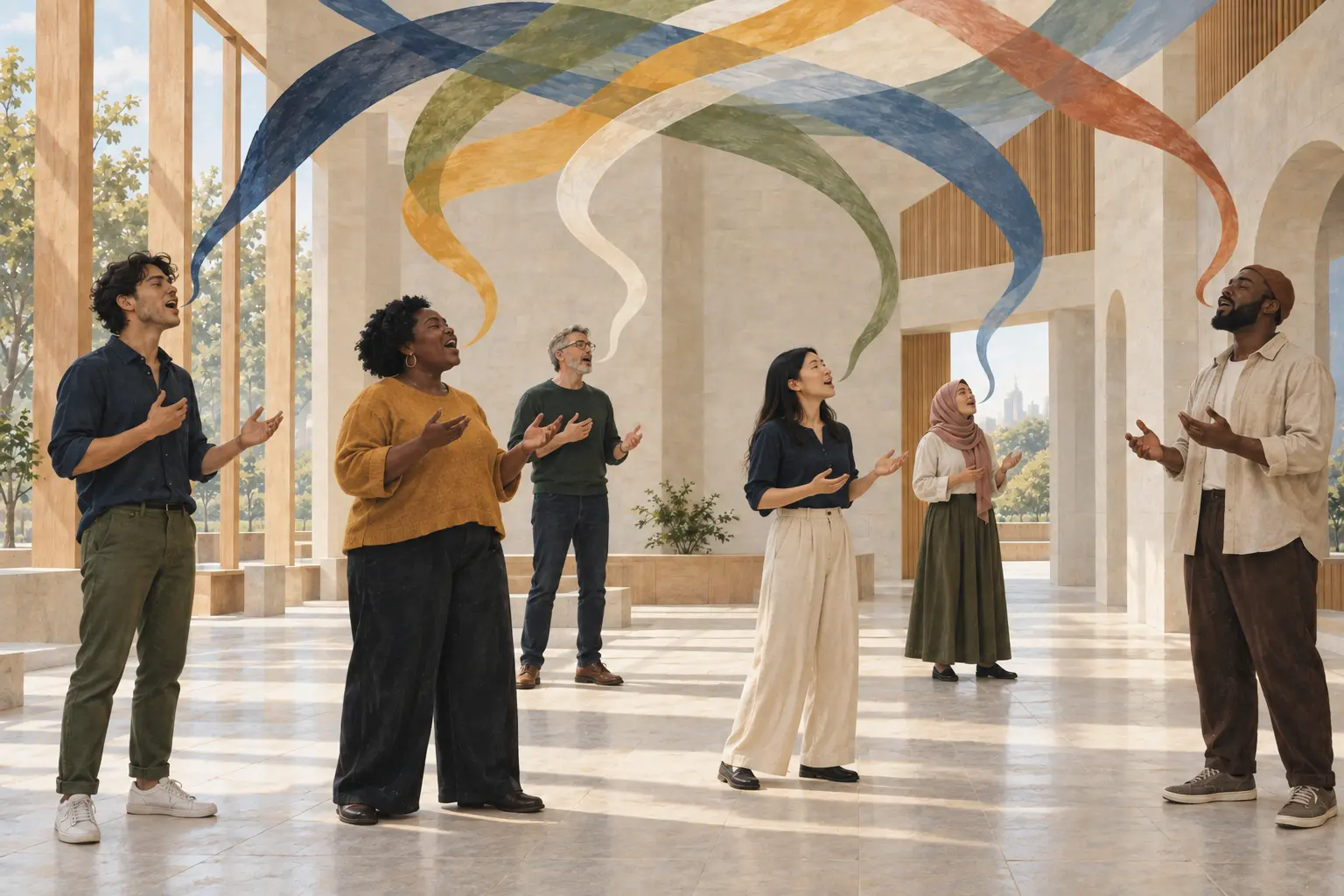
A shared purpose, not one person, at the centre
The centre of a circle is not a founder, office, building or source of capital. It is a shared purpose, jointly accepted principles and clear responsibilities. Participants need not do the same work or possess equal resources; their different contributions meet around completing the same need.
This is not a social activity added to a project afterwards. It defines the relationships on which the project will operate. A person is not reduced to one economic label such as investor, worker or volunteer.
Completing resources, not merely raising money
A map of needs is more than a budget. Knowledge, expertise, work, time, space, equipment, connections and coordination are resources too. A need one person would fund may be completed by another person’s equipment, experience or reliable follow-through.
Every contribution can matter, but contributions are not identical. One hour of support and months of responsibility may carry different weight. Criteria agreed in advance prevent difference from becoming arbitrary privilege.
Ownership, shared value and trust
An owner’s legal right to a building remains protected. Yet the service, knowledge and trust created through work in that building do not arise from the building alone. Existing ownership and the value later produced together must be considered separately.
The model’s promise of trust has three parts: contributions remain visible, rights are not decided arbitrarily, and responsibility is shared alongside value. These do not arise by themselves; they require records, agreement and a real way to challenge decisions.
From a circle to a project that can continue
Coming together around a need is a beginning. To keep the work going, people also need to agree what they will offer, who will do the work and how the required resources will be covered. The circle connects people and resources; the project turns their shared purpose into work with a schedule, named responsibilities and clear limits.
For example, a baker’s skills, an available oven, people who want regular bread and someone able to manage orders can come together. Instead of setting up a large business immediately, they can test one week of production with a limited number of orders. This is an illustrative example, not an open offer to buy or participate.
Plan for continuing work as well as income
The trial needs to account for more than flour and fuel. Baking, order management, cleaning, delivery, use of the space and maintenance are real needs too. Before starting, participants agree which contributions are voluntary, which are paid and which fall under a separately agreed shared contribution arrangement.
Selling bread does not by itself mean there is a surplus to share. The team checks whether income covers actual costs and agreed compensation, then considers resources needed for the next period and any sharing conditions. A Ben Akçe record cannot replace missing income; recording a contribution does not automatically create a payment or guarantee a return.
Continue, adjust or stop
At the end of the first period, the team reviews the results together. Do people want to order again? Are costs covered? Can each person manage their responsibilities? Can quality and delivery be maintained? If the work depends on the same person repeatedly working without pay, that burden must be made visible and the arrangement reconsidered.
The team may adjust order numbers, prices, responsibilities or production frequency. If the conditions are not there, it can reduce or stop the activity while preserving completed contribution records and agreed rights. Sustainability means continuing to meet a real need without exhausting people.
Reflect together
Beyond money, which resources are already available for your shared purpose, and which are genuinely missing?
Form your own answer first. Then identify where explanation, objection or a new practical test is needed.
Send a reasoned note about this guide →Dayanisma_Cemberi_Bolum_2_Sadelestirilmis(2).pdf
Part 2 of 7
Authored English web guide: 6 September 2026.
Original Turkish PDF preserved without alteration.